



How Stress Drains Your Energy: Understanding the Mind-Body Connection
Apr 22nd 2026
Stress Resilience • Energy Support • Nervous System Wellness
How Stress Affects Energy:
Understanding the Mind-Body Connection & Supporting Stress Resilience Naturally
Being tired is often blamed on poor sleep, packed schedules, or simply “doing too much.” While all of those things contribute, the deeper issue is more complex.
Stress and energy are closely connected, and ongoing exposure to moderate or high stress quietly shapes how the body produces, uses, and restores energy over time.
We’ve all heard the phrase “stress is bad for you,” but understanding what that means on a biochemical level can make the mind-body connection much easier to explain.
Included in this article: a practitioner-grade explanation of the stress response, cortisol, ATP, nervous system balance, adaptogens, and whole-body energy support.

Many people have moments of feeling mentally drained, physically sluggish, emotionally overwhelmed, or unable to recover fully, even when trying to prioritize rest. In some cases, the body may still be operating in a heightened stress-response state behind the scenes.
Understanding how stress affects energy can help both practitioners and health-conscious individuals take a more supportive and sustainable approach to protecting energy on a cellular level. Rather than chasing quick stimulation, many practitioners now focus on supporting stress resilience, nervous system balance, balanced cortisol rhythms, daily recovery, and whole-body vitality.
At Professional Botanicals, this broader perspective has guided formulation philosophy since 1980. Stress and energy are rarely isolated issues. They involve communication between multiple body systems, including the nervous system, endocrine system, digestion, recovery pathways, and metabolic processes.
What Happens in the Body During Stress?
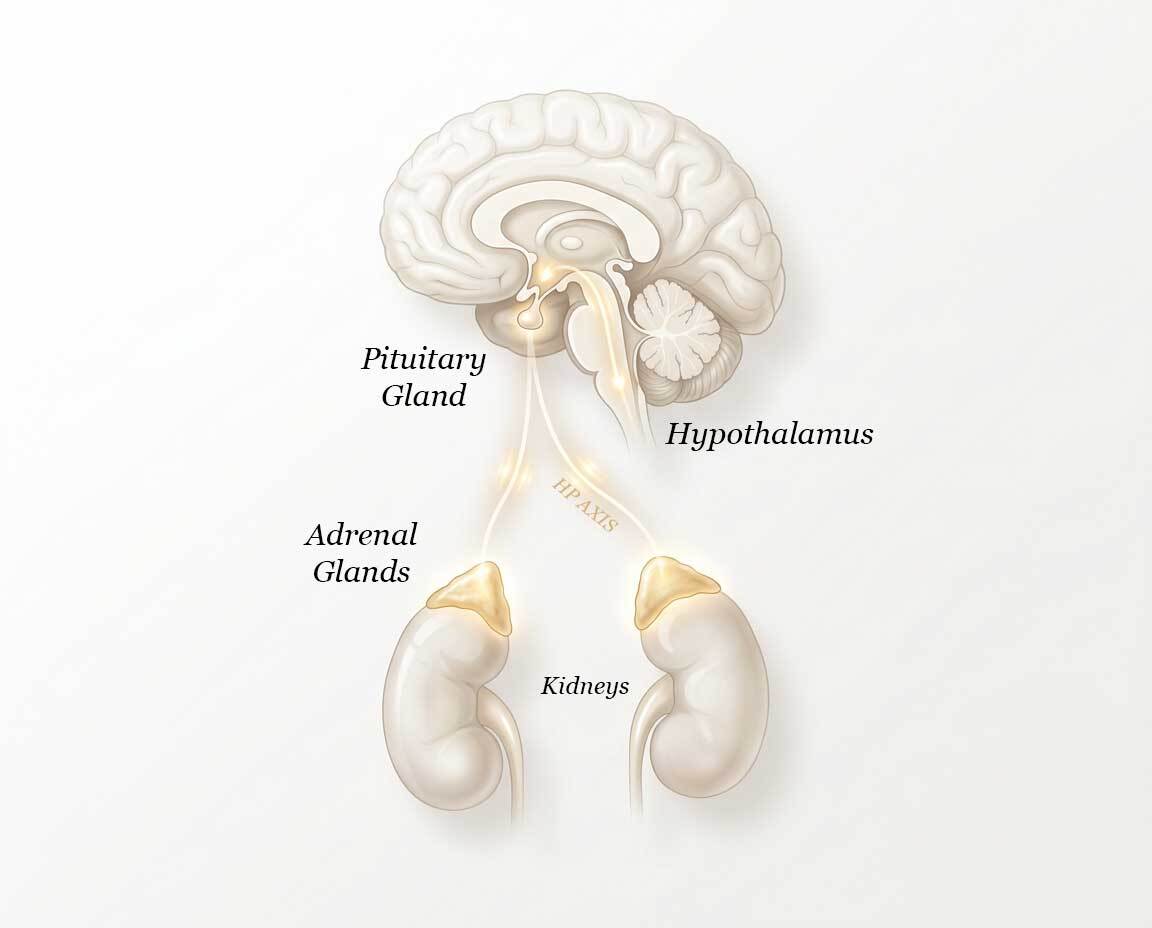
The HPA Axis Explained
One of the body’s primary stress-response systems is known as the hypothalamic-pituitary-adrenal axis, often shortened to the HPA axis.
This communication network helps the body respond to physical, emotional, mental, and environmental stressors.
This communication network connects:
- The Hypothalamus in the brain, often thought of as a command center for hormone communication
- The Pituitary gland, which sends signals to the adrenal glands
- The Adrenal glands, which sit above the Kidneys, release stress-response hormones
When the body perceives stress, signals move through the HPA axis and promote the release of cortisol and other stress-response hormones. In the short term, this response is designed to support alertness, focus, adaptation, and survival.
In Simple Terms
The stress response acts like the body’s internal emergency management system. It helps the body temporarily redirect resources toward handling immediate demands.
Why Cortisol Matters for Energy
Cortisol is often misunderstood as “bad,” but it actually plays several important roles in healthy physiology.
Cortisol helps:
- Mobilize energy
- Support alertness
- Maintain metabolic activity
- Help the body adapt during periods of increased demand
The challenge is not cortisol itself. The challenge often comes from prolonged stress exposure without adequate recovery.
Over time, the body may have a harder time maintaining balanced stress-response patterns. When this happens, many people begin noticing mental fatigue, reduced resilience, feeling tired despite rest, difficulty recovering from stress, or feeling “wired but drained.”
How Stress Impacts Energy Levels
The Body Redirects Energy During Stress
During periods of stress, the body prioritizes immediate adaptation over long-term maintenance and recovery.
Energy may temporarily shift away from functions like:
- Digestion
- Repair processes
- Recovery pathways
- Restorative nervous system activity
- Hormonal balance
- Cellular maintenance
This response is designed for survival. In short-term situations, the body reallocates resources toward systems involved in alertness, protection, and adaptation so it can respond to the stressor efficiently.
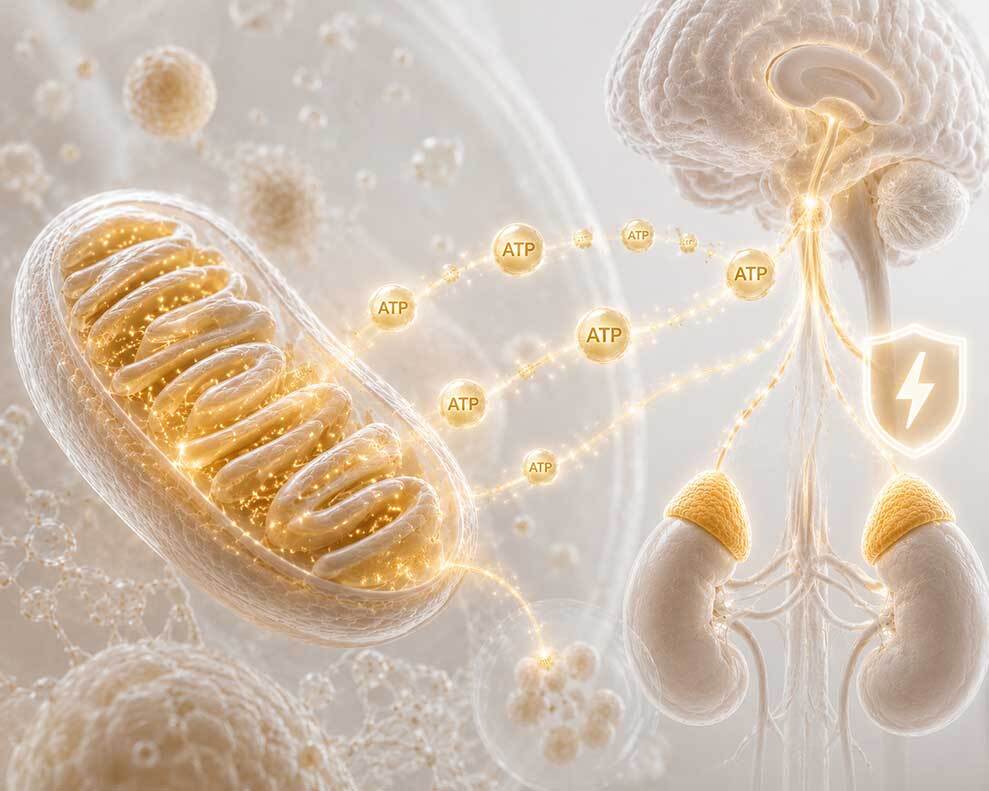
Cellular Energy Connection
At the cellular level, this process is closely tied to ATP production. ATP, or adenosine triphosphate, is the primary form of usable energy the body creates within the mitochondria to fuel cellular activity.
ATP → Primary Cellular Energy Source
When stress demand remains elevated, more cellular energy may be diverted toward maintaining the stress response itself.
This can reduce the amount of energy available for normal cellular functions such as repair, regeneration, protein synthesis, and healthy cell replication.
Over time, this shift may place strain on overall cellular efficiency and interfere with processes involved in maintaining healthy tissues, balanced signaling, and optimal cell function.
Stress Can Affect Recovery, Not Just Output
One of the biggest misconceptions about energy is that it only depends on sleep quantity.
In reality, energy also depends on:
- Recovery quality
- Nervous system balance
- Circadian rhythm regulation
- Nutrient status
- Mental load
- Stress adaptation capacity
Practitioner Insight
In clinical wellness settings, low energy is not always tied to a lack of sleep alone. Many practitioners look at stress load, nervous system patterns, recovery quality, and lifestyle demands as part of a broader wellness picture.
Common Signs Stress May Be Affecting Energy
Brain Fog and Mental Fatigue
- Difficulty concentrating
- Forgetfulness
- Slower thinking
- Mental exhaustion
- Reduced clarity
Low Motivation and Emotional Exhaustion
Some people describe feeling emotionally flat or less motivated than usual. Tasks that once felt manageable may suddenly feel overwhelming.

Feeling Tired After Sleeping
Waking up exhausted despite sleeping can sometimes reflect poor recovery quality, nervous system dysregulation, ongoing stress load, or circadian rhythm disruption.
Restoration involves more than hours asleep. It also depends on how effectively the body transitions into restorative recovery states.
Stress Fatigue vs Normal Tiredness
| Everyday Tiredness | Stress-Related Fatigue |
|---|---|
| Often improves after rest | May persist despite rest |
| Usually tied to physical exertion | Often tied to mental or emotional load |
| Recovery feels more complete | Recovery may feel incomplete |
| Temporary | Can become ongoing |
| Energy rebounds more easily | Motivation and resilience may feel lower |
In Simple Terms
Normal tiredness usually improves with recovery. Stress-related fatigue often involves the body struggling to fully reset and restore balance.
The Nervous System’s Role in Energy and Recovery
Fight-or-Flight vs Rest-and-Recover
The nervous system plays a major role in how energized or depleted a person feels.
The sympathetic nervous system is associated with alertness, stress response, and increased stimulation.
The parasympathetic nervous system is associated with rest, digestion, recovery, and restoration.

When stress becomes prolonged, some individuals may spend less time in restorative nervous system states.
This may affect:
- Sleep quality
- Digestion
- Recovery
- Mood
- Mental clarity
- Energy regulation
What Are Adaptogens?
Botanical Stress Support
Adaptogens Explained
Adaptogens are botanicals traditionally used to support the body’s ability to adapt to stress.
Unlike stimulants that may provide short-term intensity, adaptogens are often used to support balance, resilience, and steadier energy patterns over time.
In Simple Terms
Adaptogens help support the body’s ability to stay more balanced and resilient during periods of physical, mental, emotional, or environmental stress.
Historically Used In
- Ayurvedic traditions
- Traditional Chinese herbal systems
- Russian botanical research
- Herbal wellness practices
Traditionally Used to Support
- Stress adaptation
- Mental stamina
- Physical resilience
- Recovery
- Nervous system balance

In Simple Terms
Adaptogens are botanicals designed to help the body adapt more efficiently to everyday stressors while supporting balanced energy and resilience.
Read Our Education on AdaptogensPractitioner-Formulated Stress Response Support
At Professional Botanicals, stress support is viewed through a broader physiological lens. Rather than focusing only on temporary stimulation, formulations are designed to support how the body adapts, recovers, and maintains balance during ongoing physical, mental, and environmental stress.
This philosophy is one reason adaptogens play such an important role throughout many Professional Botanicals formulations.
Adaptostym: Foundational Adaptogenic Support

Adaptostym
Adaptostym is a practitioner-formulated blend designed to support healthy stress adaptation, nervous system balance, resilience, and sustainable energy.
Shop Adaptostym®Designed to Support
The primary adaptogen in Adaptostym® is Eleuthero, an herb traditionally used to support:
- Physical stamina
- Mental endurance
- Stress resilience
- Recovery capacity
- Balanced energy during periods of increased demand
Unlike harsh stimulants that may create temporary spikes followed by crashes, adaptogenic botanicals are traditionally used to support steadier, more sustainable energy patterns by helping the body adapt more efficiently to stress over time.
In Simple Terms
Adaptostym is designed to help support the body’s ability to stay more resilient, balanced, and adaptable during everyday stress.
Why Adaptogens Are Included Across Multiple Formulas
At Professional Botanicals, stress is not viewed as an isolated issue. Ongoing stress can influence multiple systems throughout the body.
- Nervous system balance
- Energy production
- Recovery pathways
- Digestion
- Sleep quality
- Hormonal communication
- Mental clarity
Because of this, Professional Botanicals includes its proprietary ADPT™ adaptogen blend across many formulations to help support whole-body resilience alongside targeted wellness goals.
Explore Stress Response Support Categories
Why Practitioners Often Focus on Multi-System Support
Stress and energy are rarely isolated concerns.
Many practitioners take a broader approach that may include supporting:
- Nervous system balance
- Endocrine function
- Digestive health
- Sleep quality
- Recovery pathways
- Nutrient status
Practitioner Insight
Many wellness professionals focus less on “quick energy” and more on helping the body maintain resilience, recovery capacity, and balanced stress adaptation over time.
Lifestyle Habits That May Support Stress Resilience
Prioritize Recovery Rhythms
Consistent sleep and recovery patterns may support circadian rhythm balance, nervous system regulation, and recovery quality.
Support the Nervous System Daily
- Movement, activity, or exercise
- Time outdoors
- Slower breathing or breathing techniques
- Mindfulness practices like meditation
- Reducing overstimulation
- Creating recovery-focused routines
Nourishment Still Matters
Nutrition plays a huge role in energy production and recovery.
Many practitioners encourage:
- Balanced meals
- Hydration
- Mineral-rich foods
- Protein intake
- Consistent meal timing
The body’s stress response can increase nutritional demand over time, which is one reason foundational nutrition remains important.
A Practitioner-Grade Botanical Approach to Stress and Energy Support
A thoughtful stress-support strategy should do more than provide temporary stimulation.
At Professional Botanicals, formulations are designed with a practitioner-focused philosophy centered around:
- Whole-body support
- Botanical synergy
- Nervous system support
- Adaptogenic strategies for homeostasis
- Long-term vitality
Since 1980, Professional Botanicals has focused on creating doctor-formulated blends designed to support interconnected body systems rather than isolated symptoms alone.
This includes the use of synergistic botanical combinations and EDS® technology, designed to support absorption and delivery as part of a comprehensive wellness approach.
Professional Botanicals Philosophy
At Professional Botanicals, we believe healing happens best in environments of balance. That’s why many formulas include our proprietary ADPT™ adaptogen blend, designed to support the body’s natural stress response and promote greater resilience.
Summary: How Stress Affects Energy
Key Takeaways
- Stress and energy are closely connected
- The HPA axis helps regulate the stress response
- Ongoing stress may affect recovery and resilience
- Energy involves more than sleep alone
- Nervous system balance plays a major role in vitality
- Adaptogens are traditionally used to support stress adaptation
- Practitioners often focus on whole-body support strategies
- Sustainable energy support is often rooted in recovery, resilience, and balance
Are You a Healthcare Practitioner?
For wellness practitioners building stress-support protocols, explore Professional Botanicals’ practitioner resources and professional account access including exclusive pricing and wholesale options.
Create or Access Your Professional AccountStay Connected With Professional Botanicals
Join the Professional Botanicals newsletter for educational insights on adaptogens, stress resilience, nervous system wellness, botanical formulation strategies, and practitioner-grade wellness education.
Frequently Asked Questions
Can stress affect energy levels?
Yes. Ongoing stress may affect how the body allocates resources, regulates recovery, and maintains resilience, which can influence overall energy levels.
Why does stress make some people feel exhausted?
Stress may affect sleep quality, nervous system balance, mental load, and recovery patterns, all of which can influence feelings of fatigue.
What is the HPA axis?
The HPA axis is a communication system involving the hypothalamus, pituitary gland, and adrenal glands. It helps regulate the body’s stress response.
What are adaptogens?
Adaptogens are botanicals traditionally used to support the body’s ability to adapt to stress and maintain balanced energy and resilience.
Why do I feel tired even after sleeping?
Energy is influenced by more than sleep duration. Recovery quality, stress load, nervous system balance, and lifestyle factors may all play a role.
What lifestyle habits may support stress resilience?
Practices such as consistent sleep routines, hydration, movement, mindfulness, balanced nutrition, and nervous system support may help maintain stress resilience.
When should someone speak with a healthcare provider?
Persistent fatigue, severe symptoms, diagnosed conditions, pregnancy, medication use, or ongoing health concerns should always be discussed with a qualified healthcare provider.